

Canvas Fabric For Bags: Technical Overview- Comprehensive Guide To Characteristics, Applications & Care
I. Definition & Construction
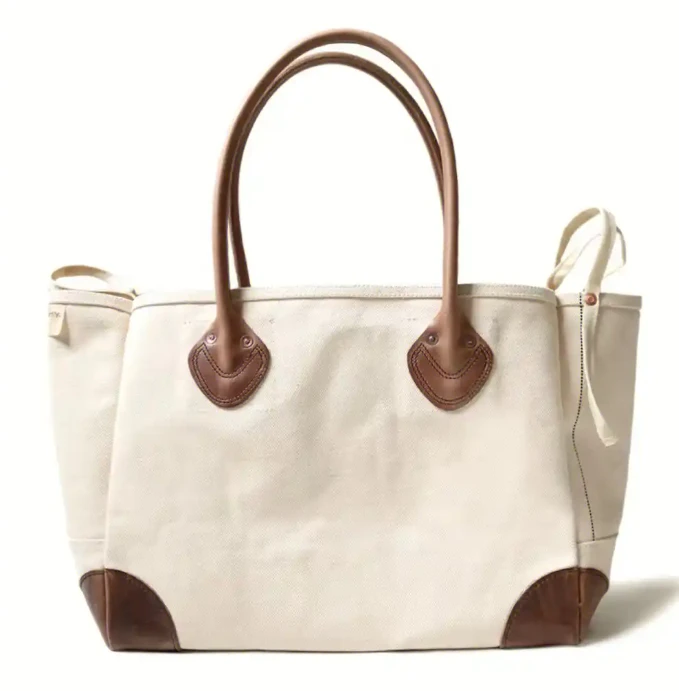
Canvas is a heavyweight, durable plain-woven fabric traditionally made of cotton (modern variants use polyester, linen, or blends). Its name derives from cannabis (Latin for hemp), historically used for sails. Key construction features:
-Plied yarns(2+ yarns twisted together) in coarse counts
-Tight plain-weave structure
-Grammage typically ranges 200-600+ GSM (grams per square meter)
II. Key Characteristics
Advantage | Limitation
✓ Exceptional durability & abrasion resistance | ✗ Heavy weight (high GSM variants)
✓ High tensile/tear strength | ✗ Hydrophilic (unless treated)
✓ Structural rigidity (shape retention) | ✗ Prone to shrinkage (cotton)
✓ Natural texture & aesthetic versatility | ✗ Wrinkling tendency
✓ Breathability (natural fibers) | ✗ Stain retention (light colors)
✓ Print/dye affinity | ✗ Potential color migration
✓ Cost-effectiveness
✓ Customizable via treatments
Specialized Treatments: Wax coating (waxed canvas), PU/PVC lamination, flame retardancy, pre-shrunk finishing, stone washing.
III. Bag Applications
- Primary Use Cases:
- Tote bags & market totes
- Backpacks (military/heritage styles)
- Duffle bags & travel gear
- Work/tool bags
- Crossbody/messenger bags
- Niche Applications:
- Sustainable fashion collections
- Technical/outdoor packs (waxed canvas)
- Designer statement pieces (printed/dyed)
IV. Care Protocol
1.Routine Maintenance:
-Brush with horsehair/nylon-bristle brush
-Spot-clean stains using:
-Water-based stains: Blot with damp microfiber
-Oil-based stains: Apply diluted pH-neutral detergent (e.g., Castile soap)
-Avoid bleach/alkaline cleaners
2.Washing:
-Hand-wash preferred: Cold water (<30°C/86°F), mild detergent, 10-min soak
-Machine wash (if permitted): Mesh bag, gentle cycle, no spin
-Critical: Never tumble dry
3.Drying & Storage:
-Air-dry inverted in shade with shape-retention inserts
-Store in cotton dust bag with silica gel packs
-For waxed canvas: Re-wax annually (e.g., Otter Wax)
4.Waterproofing:
-Apply fluorocarbon-free DWR (Durable Water Repellent) spray (e.g., Nikwax Cotton Proof)
-Test on seam allowance first
V. Technical Specifications
Parameter | Detail
Fiber Composition |Cotton (classic), Polyester (performance), Linen (textural), Blends
Yarn Configuration |2-ply to 6-ply (e.g., 10/2 = 10s count 2-ply)
Performance Metrics |Martindale abrasion: 20,000+ cycles, Tensile strength: 80+ lbs warp/weft
Environmental Profile |Biodegradable (untreated cotton), GOTS/GRS certifications available
VI.Industry Notes
-Colorfastness Testing: Perform crocking test (AATCC 8) before production
-Pattern Engineering: Account for 3-5% shrinkage in cutting
-Sustainability: Recycled PET canvas reduces carbon footprint by 32% (Textile Exchange 2023)
